
Carbonara is one of the best-known pasta dishes in the world, and one people love to argue about. It's on the pasta list at Fiena, our family-run Italian cafe, bar and restaurant at 4 Medway Court, Judd Street, London WC1H 9QX, a few minutes' walk from King's Cross St Pancras. Here's what it is, where it comes from, and how we make ours.
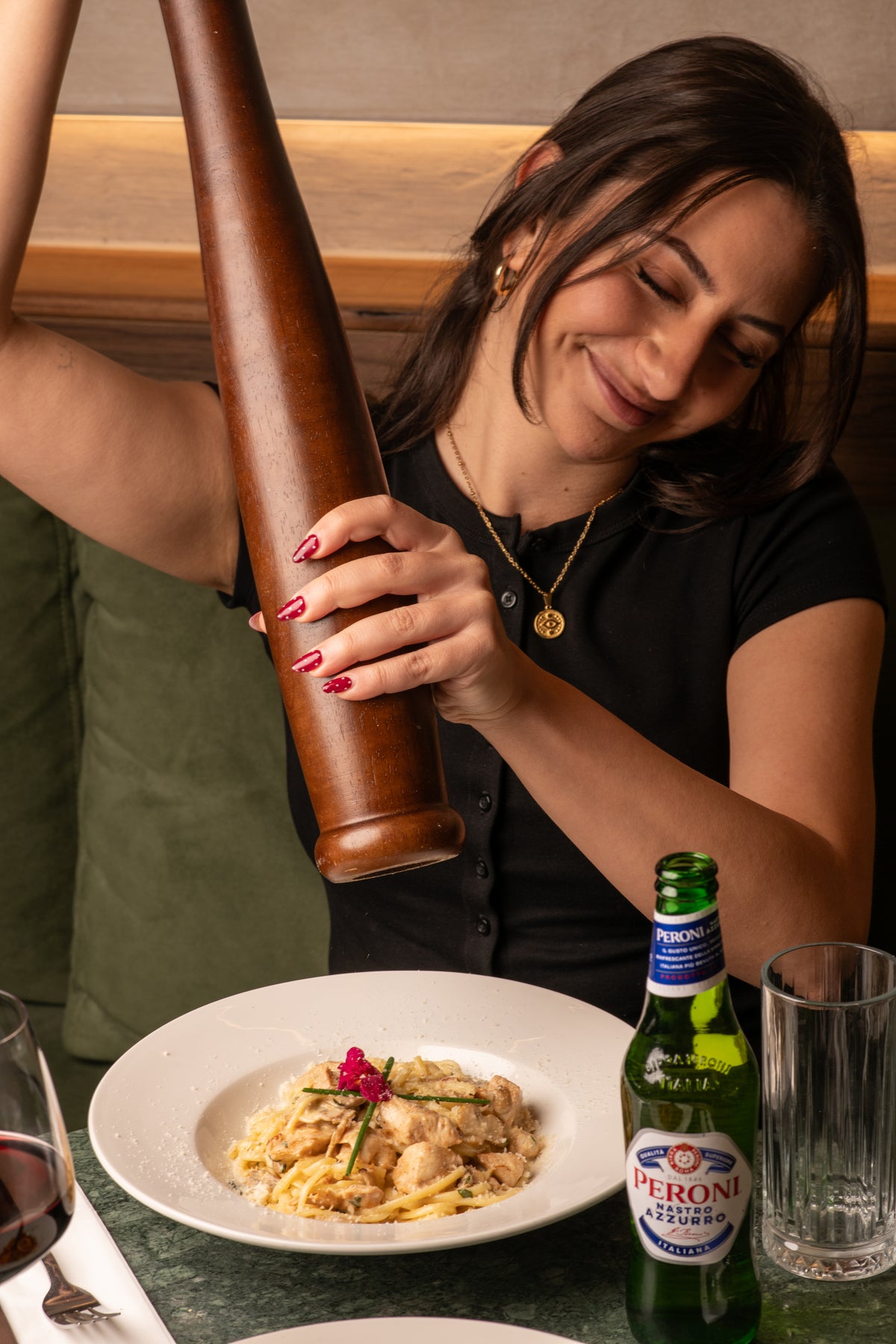
Five simple ingredients
At heart, carbonara is pasta tossed with cured pork, eggs, a hard cheese, salt and plenty of black pepper. It's typical of Lazio, the region around Rome. The meat is fried in its own fat, then the hot pasta is mixed with eggs (or just the yolks) and grated cheese away from direct heat, so the egg turns into a silky sauce instead of scrambling.
In Italy, the most common meat is guanciale, cured pork cheek, though pancetta and smoked pancetta are used too. The usual cheese is pecorino romano, and sometimes Parmesan or Grana Padano. Spaghetti is the most common shape, with bucatini and rigatoni as alternatives.
A young dish with a mysterious name
Carbonara feels ancient, but it only took its modern form and name in the middle of the 20th century. The name doesn't appear in print before the Second World War, and the first recipe published in Italy came out in 1954, in the magazine La Cucina Italiana. The same year, Elizabeth David included carbonara in her English-language cookbook Italian Food.
Nobody is sure where the name comes from. Carbonaro means charcoal burner, so one theory says it was a hearty meal for charcoal workers. Another links it to the Carbonari, a secret society of the early 19th century. It belongs to a family of Roman pastas made with cured pork, cheese and pepper, alongside pasta alla gricia. Wikipedia's carbonara page has the full story.
What about cream?
Most Italian recipes don't use cream; the creaminess comes from the egg and cheese. Plenty of 20th-century recipes did include it, though, and it's still common outside Italy because it makes the sauce more stable.
Our spaghetti carbonara
On our main menu, Spaghetti carbonara is spaghetti with smoked pancetta, egg yolk and parmesan cheese. It's served from midday every day, and gluten-free penne is available for all of our pasta dishes. See our guide to gluten-free pasta and pizza for more.
Neil kept his review short: Lovely Carbonara, was just passing through for a quick lunch
(Neil C., Google review). Anastasia came in straight from King's Cross one December evening. Her husband ordered the carbonara, and her verdict on dinner was So delicious and comforting
(Anastasia B., Google review).
Other pasta on the same list
- Spaghetti bolognese, with slow-cooked beef ragù.
- Linguine Fiena: chicken, mushrooms, garlic and cream.
- Lasagna, with fresh pasta, beef ragù, béchamel, mozzarella and parmesan.
- Penne arrabiata (V, VG): tomato sauce, chilli and garlic.
Our post on pasta at Fiena covers the whole list.
A glass of wine with it
Carbonara is rich, so a crisp white works well. From our drinks menu, the Pinot Grigio is crisp with citrus fruit, and the Vitis Nostra Grillo is a dry white with crisp citrus and green apple. If you'd rather have red, the Montepulciano d'Abruzzo is a classic medium-bodied dry red from Abruzzo, with plum and red berry aromas and soft tannins.
“I'd eat here every night if I could”
Fiona, Google review, October 2026
Good to know
- When: the main menu runs from midday until close, 22:00 Monday to Saturday and 21:00 on Sunday.
- Booking: tables for up to eight can be booked online, and walk-ins are welcome whenever we have space.
- Allergies: information on the 14 major allergens is available on request. Please speak to your server before you order.
- Address: 4 Medway Court, Judd St, London WC1H 9QX. Phone 020 4618 6314.
Plenty of black pepper, please. Book a table or walk in at 4 Medway Court, Judd Street.